
Há alguns anos, entre 2016 e 2018, tive a oportunidade de entrevistar, por e-mail, várias pessoas da comunidade de Filosofia para Crianças e Jovens, de diferentes partes do mundo.
Ao reler essas entrevistas, na sequência da mudança de plataforma do blog, percebi duas coisas: que há muitas pessoas nesta área que não conheço e que gostava de conhecer melhor; e que, entretanto, as minhas próprias perguntas também mudaram.
Por isso, decidi voltar a fazer o convite à comunidade e enviei novas perguntas.
A Chiara Pastorini teve a amabilidade de responder às minhas perguntas. Obrigada, Chiara!
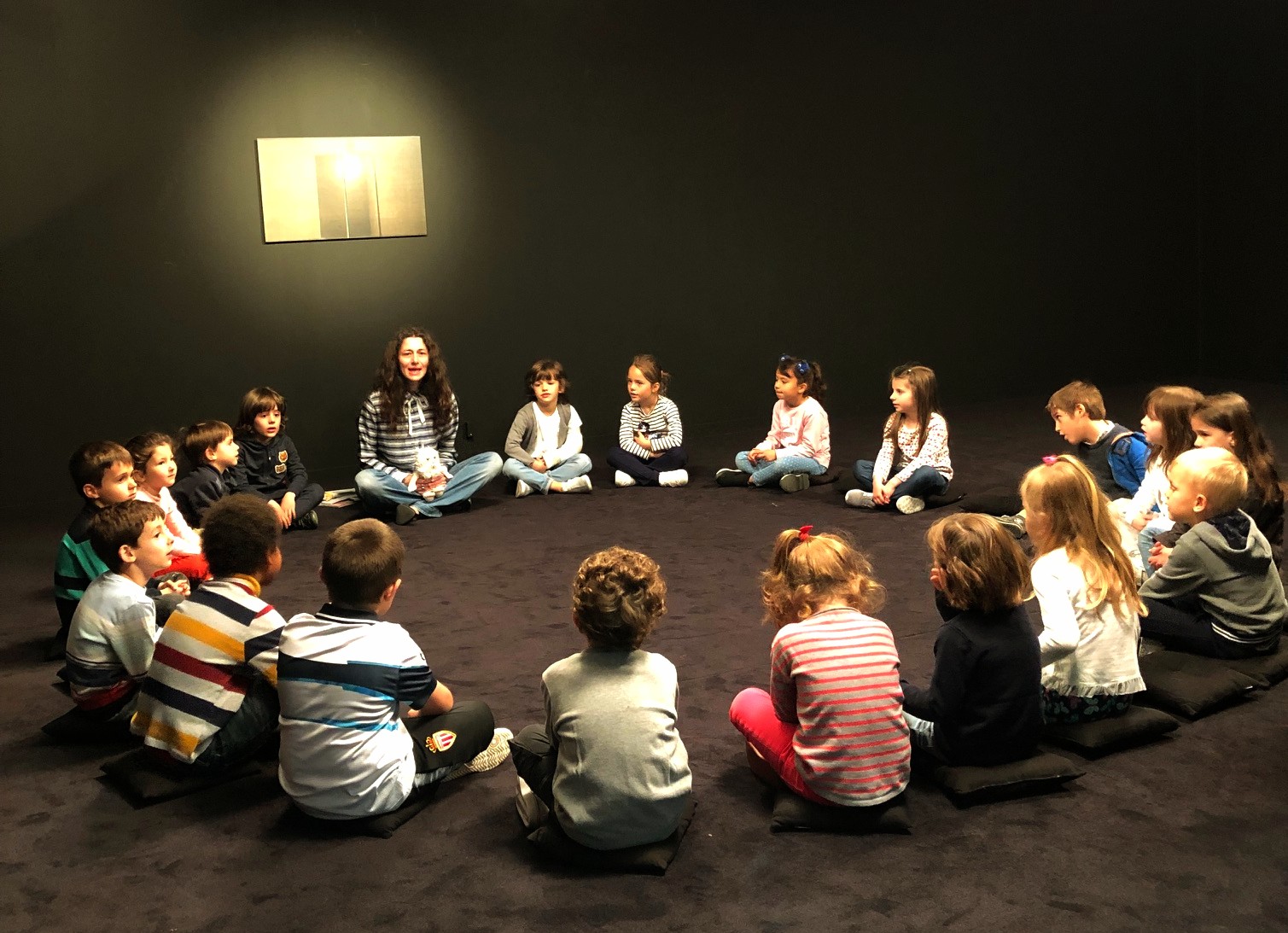
How did you found out about Philosophy for Children and Young People?
My encounter with Philosophy for Children was, in a sense, completely unexpected. During my university studies in philosophy, no one ever told me that Philosophy for Children existed. The philosophy I studied at university was primarily about great thinkers, texts, the history of ideas, argumentation and concepts. I had never encountered the idea that philosophy could be practised with children, or that children could be considered philosophical interlocutors in their own right.
And, interestingly, it was my own children who introduced me to it.
When they were three or four years old, they began asking me questions which, although expressed in their own language, were deeply philosophical: questions about death, love, existence, justice, time, identity, good and evil. They were apparently very simple questions, but they often left me without an immediate answer.
I remember being almost surprised to realise that these were not simply “children’s questions”. They were genuine philosophical questions. And, above all, I realised something: it was possible to do philosophy with them.
Not in the sense of teaching them the history of philosophy or explaining what Plato, Aristotle or Kant had thought, but in the most fundamental sense of stopping together in front of a question, trying to understand it, formulating hypotheses, comparing different points of view, changing our minds and starting again.
This was a very important discovery for me, also because it challenged something I had taken for granted throughout my entire education: the idea that philosophy was necessarily an adult practice.
From that point on, I began to search, study and discover that there was an entire tradition of Philosophy for Children, with its own history, methods, authors and an international community of people working in the field. I realised that what I had intuitively discovered with my children actually had a long history behind it.
This encounter profoundly changed my professional path and, in a way, my understanding of philosophy itself. I began to ask myself not so much how to teach philosophy to children, but how to create the conditions in which philosophy can emerge among them.
The difference may seem subtle, but for me it is fundamental. It is not about bringing children a body of knowledge that has already been packaged for them. It is about opening up a space in which they can think, doubt, formulate hypotheses, listen to those of others, change their minds, disagree and start again.
This is how my way of working gradually developed and, in 2014, led to the creation of Les petites Lumières, which I founded in Paris (https://www.ateliersdephilosophiepourenfants.com/).
Since then, I have had the privilege of working with a great many children and young people, as well as with teachers, educators, librarians, parents and other professionals working with children. And I still have the feeling, every time, that the situation itself — and above all the encounter with the children — has something to teach me.
What do you know today that you did not know when you first started working in this field?
Today, above all, I know that we should not be too eager to reach an answer.
When we first start working in this field, I think there is a strong temptation to immediately recognise what we consider “philosophical thinking” in children: a good question, a conceptual distinction, an argument, a relevant example.
Over time, I have learned that philosophy can be much more fragile, uncertain and unpredictable.
I have learned to appreciate the moment when a child says, “I don’t know.”
“I don’t know” is not necessarily a failure of the discussion. It may be precisely the point at which thinking begins.
I have also learned that a good philosophical discussion is not necessarily one in which children say extraordinarily intelligent things. It can simply be a discussion in which something has shifted.
A child who initially thought that something was necessarily true and, by the end, says, “Maybe it’s not always like that.” A girl who listens to a classmate’s argument and says, “I had never thought about it that way.” A young person who finally manages to formulate a question they have been carrying inside for a long time.
These may seem like small movements, but they are movements of thought.
I have also learned that the role of the adult
is much more difficult than I imagined. The adult should not be absent, but neither should they occupy all the space. They should not pretend to know nothing, but they must be able not to know on behalf of the children. They need to know how to guide without directing the thinking towards a predetermined conclusion.
That is a very delicate form of balance.
Finally, I have learned that philosophy with children is not simply an activity. It is a way of looking at childhood. And perhaps also a way of looking at the world.
Has your practice changed the way you think about philosophy? If so, how?
Yes, profoundly.
Before working with children, I thought of philosophy mainly as something found in texts and in the history of philosophy. Today, I think of it much more as an attitude.
Philosophy can, of course, be study, reading, interpretation and knowledge of the history of thought. But it can also be something very simple: stopping in front of something that seemed obvious and asking, “Why?”
Doing philosophy with children has made me realise how deeply philosophy is connected to the possibility of suspending what seems obvious.
Take an apparently banal statement such as: “You have to be yourself.”
A child might ask, “But how do I know who I am?”
And suddenly, a sentence that seemed like a cliché becomes a philosophical question.
Or: “We should be kind.”
“But should we be kind to someone who isn’t kind to us?”
Or: “Everyone is free.”
“Even when they have to go to school?”
“Even when they have to obey their parents?”
“Even when they are afraid?”
Children have this extraordinary ability to take a sentence and open it up.
This is why I now think that philosophy has a great deal to do with making problematic again what we have stopped questioning.
I also believe that philosophy needs other people.
Thinking together does not mean thinking the same thing. On the contrary: it means discovering that my thinking becomes richer when it encounters a thought that is different from my own.
This experience has also moved me away from a certain idea of philosophy as something necessarily serious, abstract and austere.
Philosophy can be rigorous and, at the same time, playful. It can pass through the body, drawing, theatre, music, storytelling, movement and imagination.
This is why, in my work, I have also developed practices that I call philo-art, in which philosophical practice enters into dialogue with different artistic forms.
For me, art and philosophy have something deeply in common: both can create a distance from the world as it is and allow us to imagine that it could be otherwise.
And childhood? Has doing philosophy with children changed the way you think about childhood?
Absolutely.
Perhaps this is one of the aspects that has transformed me the most.
Today I think much less of childhood as an age of “preparation” and much more as a full and present moment of existence.
We too often look at children in terms of what they will become: future adults, future citizens, future students, future workers.
Philosophy for Children has taught me to pay much more attention to who they are right now.
A child is not an incomplete adult.
A child is a person experiencing the world in a particular way.
And that person has something to teach us.
Not because children are naturally wiser than adults — I do not believe in romanticising childhood at all — but because they have experiences, questions, perspectives and forms of attention that we adults have often lost.
At the same time, working with children has also taught me to be wary of the romantic idea of the “philosophical child”.
I do not believe that all children are naturally philosophers and that adults simply need to let them talk.
Philosophical practice requires conditions, time, listening, tools and a certain discipline of dialogue.
Children can think philosophically, but they need a space in which this thinking can develop.
And this is where I see an enormous responsibility for the adult.
Creating a space in which a child can say, “I disagree”, “I don’t understand”, “I think the opposite”, or “I’ve changed my mind” is an incredibly powerful educational act.
For me, educating children to think also means educating them to change their minds without losing face.
What question do you think our community should ask itself more often?
One question seems increasingly important to me:
Why do we do philosophy with children?
It may sound like a simple question, but I believe we should return to it again and again.
Why?
To develop critical thinking?
To educate for citizenship?
To learn how to discuss?
To improve language skills?
To learn how to reason?
To become more tolerant?
To learn how to listen?
All of these can be valid answers. But I worry that if we turn philosophy into a tool serving other objectives, we risk forgetting what makes it specifically philosophical.
Perhaps we do philosophy with children also because they have a right to think.
Not simply to learn what other people have thought.
They have the right to question the world.
They have the right to disagree.
They have the right to take their own questions seriously.
And I think we should also ask ourselves: what happens when we stop considering children merely as people to be educated and start considering them as people to think with?
What are we taking for granted in our work with children and young people?
Perhaps we take for granted that speaking is the same as thinking.
A very lively discussion is not necessarily a philosophical discussion.
We can have twenty children talking a great deal and, at the same time, very little shared thinking taking place.
Conversely, a discussion containing silences, hesitations and very few words can be extremely rich.
Perhaps we also take for granted that thinking must necessarily be verbalised.
This is one of the reasons why I am so interested in the relationship between philosophy and art.
A child can have a philosophical insight through an image, a gesture, a theatrical scene, a metaphor or a story.
Philosophical expression does not necessarily have to take the form of a well-constructed sentence.
We should also ask ourselves to what extent our work is still shaped by an adult idea of what it means to “think well”.
Perhaps we too quickly reward children who speak well, use a rich vocabulary and formulate orderly arguments.
But what happens to the quieter child?
To the child who thinks a great deal but speaks very little?
To the one who needs to draw?
To the one who needs to move?
To the one who asks a seemingly absurd question?
I believe that a genuine community of inquiry needs to make room for different forms of intelligence and expression.
And perhaps we also take for granted that our role is to make children’s thinking progress.
Sometimes I wonder whether we should be more willing to accept that a discussion may not “lead anywhere”.
Not every question needs to be resolved.
Some questions are valuable precisely because they continue to accompany us.
What worries you — or gives you hope — about the future of this field?
What worries me most are speed and instrumentalisation.
We live in a world in which everything is expected to be immediately useful, measurable and assessable.
Philosophy, too, risks being turned into a skill to be acquired.
“Through philosophy, children develop critical thinking.”
“Through philosophy, they improve their skills.”
“Through philosophy, they learn to communicate.”
All of this may be true, but if we stop there, we risk losing something essential.
Philosophy is not only about what it produces.
It is also a space in which we are allowed to produce nothing.
A space in which we can stop, doubt and waste time.
And this very idea of “wasting time” seems extremely precious to me today.
I am also concerned about our relationship with new technologies and, in particular, with artificial intelligence.
Not because I think AI is necessarily negative. On the contrary, I believe it can open up extraordinary possibilities.
But it forces us to ask fundamental questions: What does it mean to think when a machine can produce an answer in a few seconds? What does it mean to be creative? What does it mean to know something? What does it mean to have an idea of one’s own?
These are questions that, in my view, Philosophy for Children will increasingly have to address.
And yet, this is also where my hope lies.
Because precisely in a world where answers are becoming increasingly easy to obtain, questions become even more important.
And children are exceptionally good at asking questions.
Perhaps our responsibility will be not simply to teach them how to find an answer quickly, but to help them recognise when it is worth stopping and asking: “But are we sure this is the right question?”
I am also given hope by the fact that, despite everything, I constantly meet teachers and educators who want to create these spaces.
People who feel that something is missing in school, in education, in our relationships with children, and who are looking for other ways of being with them.
Every time I enter a classroom and see a group of children seriously discussing a question that concerns life, I think that there is still so much to do.
And that it is absolutely worth doing.
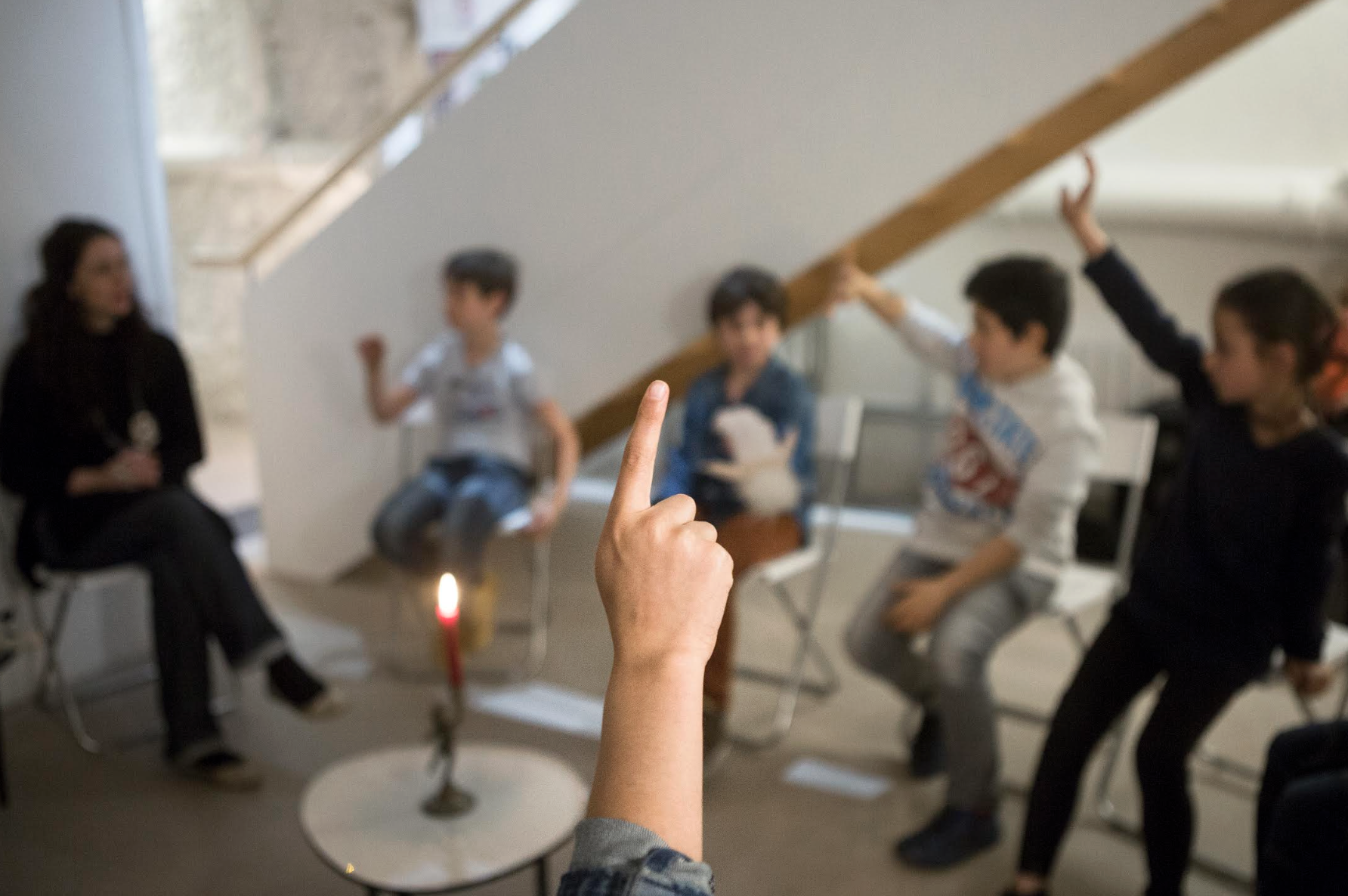
What question are you trying to answer at the moment?
The question that is accompanying me today is:
How can we educate people to think without turning thinking into something that can be taught once and for all?
This question interests me deeply because I feel that there is a contradiction at the heart of our work.
On the one hand, we want to educate children and young people to think independently.
On the other hand, whenever an adult organises an educational activity, there is a risk that they already have in mind the kind of thinking they would like to produce.
So how can we create the conditions for thinking without predetermining the outcome?
How can we accompany without guiding too much?
How can we transmit tools without simultaneously transmitting our own answers?
And, above all, how can we allow children to become autonomous thinkers without leaving them alone in the face of the complexity of the world?
Perhaps this is one of the great educational questions of our time.
And there is another question that interests me, which somehow follows from it:
How can we preserve a space for uncertainty in a world that constantly asks us to be certain, fast and high-performing?
I believe Philosophy for Children has an enormous responsibility here.
A philosophical community should not be a community of people who possess the right answers, but a community of people who continue to formulate better questions.
And perhaps this is precisely what I love so much about your project, Joana: the fact that you have decided to return to a series of interviews that already existed, not in order to repeat what was said before, but to ask again, years later, what has changed in our questions.
In the end, I think this is one of the most beautiful definitions of philosophy: not necessarily finding new answers, but becoming capable of asking new questions.
___
Chiara Pastorini started working in the field of Philosophy for Children and Young People many years ago, in 2014, with a project called Les petites Lumières, based in Paris, which now has a team of around twenty facilitators. More specifically, Les petites Lumières is dedicated to practising philosophy with children and adolescents (as well as with adults), training educators and teachers, and creating educational and artistic approaches that enable children to develop and exercise their own thinking.
Please check out Chiara’s work:
 filocriatividade
Deixe um comentário