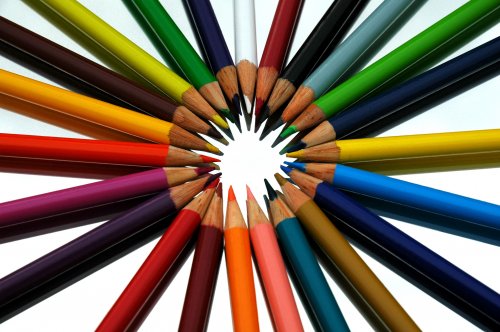
 The traditional view is that some people are creative and others are not. The people who are seen as creative do have a lot of ideas – some of them better than others. What is clear is that they are motivated to be creative and to try to find new ways of doing things. The formal processes of lateral thinking are very powerful in the deliberate production of new ideas. They are based on an understanding of the brain as a self-organising information system that makes asymmetric patterns. There is no mystique or magic about it. The techniques can be learned, practised and used systematically. It is no longer a matter of waiting for new ideas to happen; they can be formally produced. Just as we can learn mathematics or French, so we can also learn ‘idea creativity’. The English language (and probably most others) does not distinguish between idea creativity and artistic creativity. If you create something which was not there before, you are creative. You may also ‘create’ a mess – which was not there before. Because of this failure of language, people are reluctant to accept idea creativity as a learnable skill. They ask if you could produce a Beethoven or a Renoir through formal training. Once we have separated idea creativity from artistic creativity, then we can set about learning and developing the skill of thinking for new ideas. That is what ‘lateral thinking’ is all about. There is a growing emphasis on ‘innovation’. This really means putting into effect something that is new for your own business. That idea or process may be borrowed, copied or stolen from someone else. It is only rarely that innovation arises from a created new idea. We wait for new ideas because we do not know that new ideas can be produced deliberately. One afternoon, some workshops using just one of the techniques of lateral thinking generated 21,000 new ideas for a steel company. You would have to wait rather a long time for that number of ideas ‘just to turn up’. New ideas are unusual because our brains are designed to make patterns or routines and to use them. Without this ability, life would be impossible. We need to use this ability, but also to escape from the tramlines of routine from time to time. That is what creativity is about.

filocriatividade
filosofia para/com crianças e jovens | mediação cultural e filosófica | #ClubeDePerguntas | #LivrosPerguntadores | perguntologia | filosofia, literatura e infância
🟩 últimas publicações
- 10 erros que os adultos cometem quando uma criança faz uma pergunta
- Pós-Graduação em Filosofia para Crianças e Jovens: uma formação para quem quer aprofundar a prática
- 3 razões para visitar um cemitério, em família
- What do we still have in common? Ce mai avem în comun?
- A Loja dos Defeitos, de Joana Rocha, Marta Curtis e Lisa Penedo
🟥 quem sou eu?
🟡 [joana rita] Sou licenciada em Filosofia pela FCH da Universidade Católica.
Desde 2008 que viajo pelo país promovendo oficinas de pensamento crítico e criativo, para todas as idades.
Em 2019 concluí o mestrado em Filosofia para Crianças, com a defesa da 1.ª dissertação do país nesta área: Queres saber? Pergunta. (UAc).
Tenho um artigo publicado na Springer, “Why vote? A reflection on the democratic nature of dialogical inquiries” (2023). Em 2025 publiquei dois artigos no Journal of Philosophy in Schools.
Sou a autora do livro Como desenvolver o pensamento crítico das crianças (2025).
Membro honorário da Federación Mexicana de Filosofía para Niños A.C.
Em 2021 o projecto filocriatividade recebeu o reconhecimento da Cátedra UNESCO/Universidade de Nantes: «Práticas de Filosofia com Crianças»
🟧 subscreva a newsletter
Posted in Uncategorized
 filocriatividade
Deixe um comentário